by Victoria Pang '25
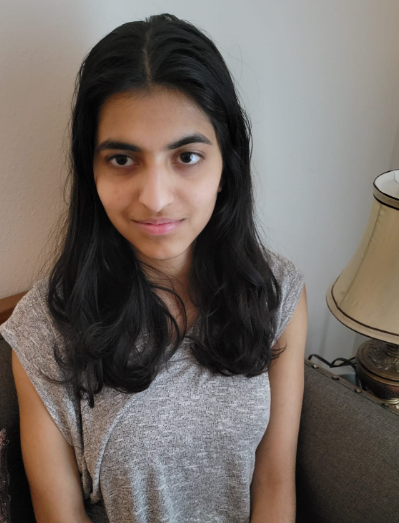
Throughout her life, Sara Bohra has moved to many places due to her parents’ jobs: jumping from Texas to Indonesia, Australia to New Jersey, and finally landing in Seattle to pursue a degree in biochemistry with a minor in French.
Sara is a senior on the pre-health track, hoping to one day attend medical school. While she acknowledges that many pre-medical students pursue research to simply “tick off a box,” she stresses that her participation in undergraduate research is not directly tied to her aspirations to attend medical school, but rather to her own interest in science. In high school, Sara had the same teacher for her chemistry and biology class, allowing her to connect the dots between these subjects. Her interest back then influenced her to pursue scientific research in parallel with her aspirations to become a physician.
Sara’s Undergraduate Research
Sara is involved in undergraduate research in Prof. Alessandro Bitto’s laboratory in UW’s Department of Laboratory Medicine and Pathology. The Bitto lab studies ageing pathways and mechanisms, in hopes of developing novel therapies for age-associated diseases. In this lab, Sara has been involved in two separate research projects. Her first project was investigating aging mechanisms in yeast cells. The specific strain of yeast she uses is Saccharomyces cerevisiae, also known as Brewer’s yeast. Yeast, as eukaryotes, share similarities with human cells in several ways, and serve as a valuable model organism for studying various biological processes. For this project, her primary task was to perform yeast cell dissections, which is a process of manipulating yeast cells in order to produce specific strains for genetic study. These yeast cell dissections would then allow her to determine the factors affecting how many generations these cells can replicate until they can’t anymore, identifying essential genetic hallmarks that influence its lifespan. The results can then be used to inform studies in human cells, carrying important implications for ageing-related disorders such as Alzheimer’s disease.
Recently, Sara has been learning how to genotype mice in a project focused on investigating possible therapies for genetic disorders. The class of genetic disorders she studies is known as double knockout, in which two genes are inactivated at the same time. While these disorders are quite rare, they could potentially lead to significant medical complications such as cardiac issues and Parkinson’s disease. Specifically, the double-knockout genetic disorder Sara studies is Leigh Syndrome, which is a severe neurodegenerative disorder that leads to mitochondrial failure and eventually respiratory failure. To do so, Sara genotypes mice that were bred to carry an autosomal recessive gene characteristic of Leigh Syndrome. To affirm that the mice have the correct genotype for experimental conditions, Sara runs a polymerase chain reaction (PCR) on genetic material obtained from the mice’s tails. PCRs are a common way to ascertain genetic composition though continuously amplifying genetic material. After affirming the genotype of the mouse, they can be used in subsequent experimentations by other members of the lab in hopes of deducing possible therapies to reverse, or at least alleviate, genetic diseases caused by the inactivation of both genes.
For Sara, she says “there was definitely a learning curve with [the] techniques” she uses for both projects. Other undergraduates also begin research wanting to simply gain experience, so a shared mission between the undergraduates of gaining research experience helped her feel more included in an environment that could feel overwhelming at times.
Mentorship and Advice
Since the Bitto lab is rather large, Sara primarily works with Shaw Hesse, her laboratory manager. For Sara, Shaw’s casual attitude allowed her to feel more welcome in the lab, as well as have the flexibility to work research into her schedule and around other commitments. She enjoys the laid-back and accommodating culture of the lab. Additionally, in a larger lab, there naturally are more undergraduate members than in a smaller lab. When she first started out in research, she was the one asking questions to veteran members, hoping to understand concepts and processes better. Now, almost three years later, she stands on the opposite side of the spectrum. As one of the undergraduates who has been in the lab for the longest, new undergraduates in the lab now ask her for guidance. Having been on both sides of the interaction, she stresses the importance of asking questions to build confidence, especially in a daunting, rigorous environment.
Over the summer, Sara had the opportunity to attend a research conference, which she describes as “a science fair for adults.” She enjoyed her time there, and the conference was a valuable learning experience for her.
For students looking to understand whether undergraduate research aligns with their interests, Sara recommends talking to other people in research and asking them what they do. And if a student does ultimately decide to pursue undergraduate research, Sara highly recommends students start with a network. “Talk to professors, attend office hours,” suggests Sara, as she got her own research position through a peer facilitator in her biology class telling her that their lab had an opening. She also states the importance of staying open-minded—while it is important to have a general interest in a particular scientific topic, it is also beneficial to remain open-minded to gain knowledge and experiences. As for undergraduates newly joining a research lab, she reminds them that it is not their fault if a lab doesn’t suit them, and that it is alright to change labs to something that is more well-aligned to their interests. After finding a suitable lab, Sara advises undergraduates to be open to change, and like her, they will subsequently be able to take full advantage of their research experience.
To learn more about conducting undergraduate research at the University of Washington, explore the Department of Chemistry’s Undergraduate Research page, meet with an undergraduate adviser, visit the UW Office of Undergraduate Research, or reach out to Free Radicals, the undergraduate student club for chemistry and biochemistry majors.