Winter 2026 ChemLetter

Dear Friends of Chemistry,

Happy New Year, everyone — 2026 is here! 2025 brought its share of challenges. Even so, we see clear examples of the resilience of our department and alumni, and of the positive impacts our work continues to have on our world. Several faculty have received recognition for advancing diagnostic tools: Anne McCoy for her work on molecular vibrational modes, Ashleigh Theberge for enabling at-home collection of RNA, and Michael Gelb for developing newborn screening technologies to identify previously undiagnosable conditions.  Other faculty will reach notable milestones in the Department this year: the work anniversaries of Professors Dustin Maly and Robert Synovec who are celebrating 20 and 40 years, respectively. 

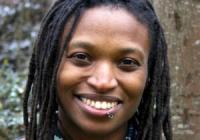
Our alumni are also making an impact across sectors and around the globe, including Alisha Jones, now an Assistant Professor at NYU studying the structural dynamics and biological function of RNA, and Jonathan Cox, who applied soil science to improve agricultural production in Kyrgyzstan. We know these are just two examples among many, and we welcome hearing from you about your activities since graduation.  

We have amazing undergraduate researchers who continue to excel in our laboratories, with several recognized as Washington Research Foundation and Levinson Fellows — reflecting the foundational role that chemistry and biochemistry play across many pathways at UW.

We are grateful for your continued support. Despite the headwinds that we face, your generosity helps us recruit top graduate students, strengthen our research programs, create opportunities for undergraduate research, and support community-building events. Excitement for our new Chemical Sciences Building is growing, and I look forward to sharing more with you all soon.

Best regards,

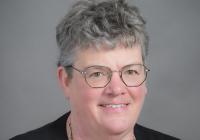
Alshakim Nelson
Professor & Chair, Department of Chemistry
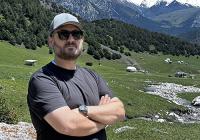
Chemistry PhD alum Jonathan Cox spent most of 2025 in Kyrgyzstan, helping farmers improve their soil—and their crops—through soil testing.  Continue reading on UW College of Arts & Sciences News
The Biophysical Society featured Alisha "Jonesy" Jones, PhD '15 in their "Biophysicist in Profile" column in the November 2025 issue of BPS Bulletin.The profile covers Jones's educational journey from high school through her graduate studies at the University of Washington Department of Chemistry where "she found her true calling in RNA structural biology," in the group of…
Read more
What if buildings could repair small cracks, respond to their environment, or even help capture carbon?Join us for an interdisciplinary public lecture and exhibition at the University of Washington that explores how researchers are using living and bio-based materials to rethink how buildings are made and how they perform in a changing climate.Lecture detailsDate: Tuesday, February 11, 20266:00 PM – Lecture | Bagley Hall, Room 1317:15 PM – Exhibition Opening Reception | Gould Hall, Gould…
Professor Ashleigh Theberge -- and the work of the Bioanalytical Chemistry for Medicine and the Environment Lab she co-leads with Affiliate Professor Erwin Berthier -- is featured in Nautilus magazine's Catalysts of Discovery, a special issue exploring bold ideas at Schmidt Sciences.Theberge was…
At their 2025 Newborn Screening Symposium, October 5-9, 2025, the Association of Public Health Laboratories presented Professor Michael H. Gelb, the Boris and Barbara L. Weinstein Endowed Chair in Chemistry at the University of Washington, with the 2025 Harry Hannon Laboratory Improvement Award in Newborn Screening. This award honors those who have made significant contributions in one or more of the…
The American Physical Society has named Professor Anne B. McCoy as the recipient of the 2026 Earle K. Plyler Prize for Molecular Spectroscopy & Dynamics “for impactful contributions to the anharmonic vibrational spectroscopy and dynamics of molecular radicals, ions, and clusters.” Molecular spectroscopy and dynamics are foundational work that enable predictive control of molecular behavior, driving advances across chemistry…
We are incredibly proud that eight of the ten WRF Fellowship recipients are affiliated with the Department of Chemistry, either as biochemistry or chemistry majors, or as students conducting research with faculty in the Department of Chemistry.Please take some time to Meet the Fellows.The Washington Research Foundation Fellowships…
Nine of the twelve Levinson Emerging Scholars for this academic year are affiliated with the Department of Chemistry, either as biochemistry or chemistry majors, or as students conducting research with faculty in the Department of Chemistry. We are so proud!Meet the Levinson Scholars.The Levinson Emerging Scholars Program…
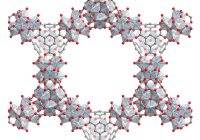
Professors Dianne Xiao and Douglas Reed both use metal–organic frameworks (MOFs) in their research. In this UW News Q&A, they explain what these “molecular tinker toys” are and why they matter, following the October 8 announcement that Susumu Kitagawa, Richard Robson, and Omar M. Yaghi received the 2025 Nobel Prize in Chemistry for developing MOFs.…
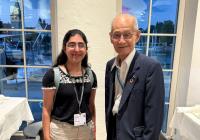
Chemistry graduate student Sena Noaman was selected to participate in the 74th Lindau Nobel Laureate Meeting in Chemistry, which took place from June 29 to July 4, 2025. Only young scientists up to the age of 35 are eligible to apply to participate and selection is a once in a lifetime opportunity, as attending a past meeting renders an applicant ineligible for future consideration. Doctoral students who are selected must show a genuine interest in science and research, show a strong commitment…
Content will be added on this page as alumni submit updates, so check back periodically! If you have an update, please let us know. Last update: 1/20/20261960sMargaret "Kit" Ellis (B.S. 1967, M.S. 1969) was interviewed by Jill Freidberg for HistoryLink.org on managing the 195-acre Ellis Family Forest near Gig Harbor, WA. The June 3, 2025, interview (edited for clarity and length), along with shorter audio recordings and photographs are…
Our capacity for excellence in research and scholarship is a direct result of the collective efforts of friends and alumni coming together to support the department’s work.In the past year, your gifts have made a tangible impact on:Recruiting top graduate students: Your generous fellowship support attracts the brightest minds to our program.Strengthening research programs: Endowed professorships expand professional development activities, provide salary support, and fund essential lab equipment…

Your gifts make a difference...

Strengthen our department through the Friends of Chemistry Fund which is perhaps the single most important resource for the department. Gifts to this fund provide unrestricted support that can be directed where it is needed most.

Any gift — large or small — is sincerely appreciated!

Give now!

Share